
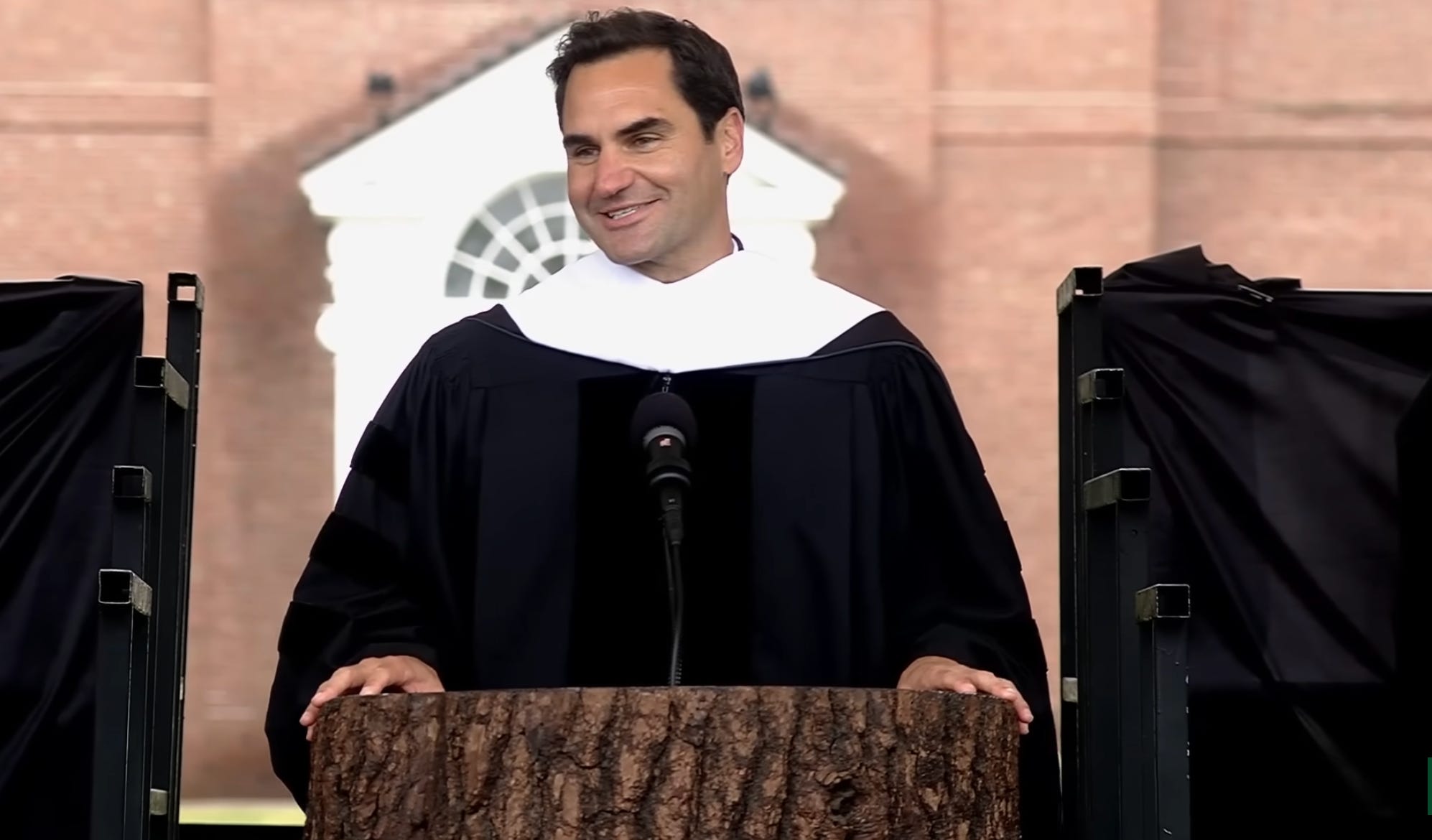
I started working on this essay shortly after watching Roger Federer’s 2024 Dartmouth commencement address. In it, he compares many aspects of tennis to life. Looking effortless actually requires immense effort. Winning the game doesn’t mean winning every point. And there’s more to life than the stage on which one performs.
Federer’s speech got me thinking about other ways in which tennis teaches valuable life lessons. And as we begin the new year, it seemed like as good a time as any to finally hit publish.
One of the more meaningful skills in tennis is to avoid unforced errors. An unforced error is when you lose a point by your own doing – hitting the ball out of bounds, into the net, etc – that should have been easy to place in the court. They’re considered unnecessary mistakes. In contrast, a “winner” is a shot that the opponent cannot return (thereby directly winning the point).
Many of the best players in the world still lose a significant number of points because of unforced errors. But the very top avoid unforced errors more than the rest. Points in a Federer vs. Nadal match, or an Alcaraz vs. Sinner one, are won with winners.
Avoiding unforced errors put these players in positions to hit more winners.
I’ve found this a useful framing for approaching life. Want to get super fit? The “winners” might be all of the health optimizations – focused athletic training, supplements, maybe even cold plunges and sauna. But the avoidance of unforced errors matters more: limit packaged foods and refined sugar, try to move your body daily, and get enough sleep. Want to do well at work? Strive to be reliable and kind. Being unpleasant to be around is a massive unforced error that often supersedes any of the winning qualities that might otherwise be present (strong work ethic, quality performance, etc).
Just as reducing unforced errors enables top tennis players to hit more winners, the avoidance of mistakes in whatever you choose as your “sport” helps create the conditions to fully excel. It sets a higher baseline. It puts you in more positions of opportunity. And it lets your winners shine.
One could argue that a major difference in tennis vs. life is that, in tennis, you’re playing against a direct opponent. Avoiding unforced errors means your competitor has to play a little longer, a little harder, a little more strategic. And maybe your endurance prompts them to make an unforced error, leading you to win the point. That dynamic doesn’t apply 1:1 in life. Your main “opponent” is often yourself.
But maybe these are less different than they seem. When a player hits an unforced error, they’re defeating themself. Losing a match because you played poorly feels far worse than knowing you left it all on the court. The most fulfilling successes come from hitting real winners, not from one’s opponent losing. That’s true in tennis, in business, and in life. And it often starts with avoiding unforced errors.